CRITICAL THINKING
INTRODUCTION:

In today's rapidly changing and complex world, the ability to think critically has become increasingly essential. Critical thinking is a skill that enables individuals to analyze, evaluate, and interpret information effectively, allowing them to make informed decisions, solve problems, and navigate challenges with clarity and precision. In this introduction, we'll explore the importance of critical thinking, its key components, and its relevance in various aspects of life.
- At its core, critical thinking involves a disciplined and systematic approach to reasoning and problem-solving. It requires individuals to question assumptions, examine evidence, consider alternative perspectives, and draw well-founded conclusions. By honing their critical thinking skills, individuals can become more discerning consumers of information, better decision-makers, and more effective communicators.
- In today's information age, where we are inundated with vast amounts of data and opinions from various sources, the ability to think critically is indispensable. Critical thinking enables individuals to sift through the noise, distinguish between credible and unreliable information, and discern the underlying biases and agendas that may influence the information presented.
Moreover, critical thinking is not confined to academic or professional settings but is relevant across all aspects of life. Whether making personal decisions, evaluating news articles, or participating in discussions on social issues, individuals rely on critical thinking to navigate the complexities of everyday life.
The components of critical thinking include:
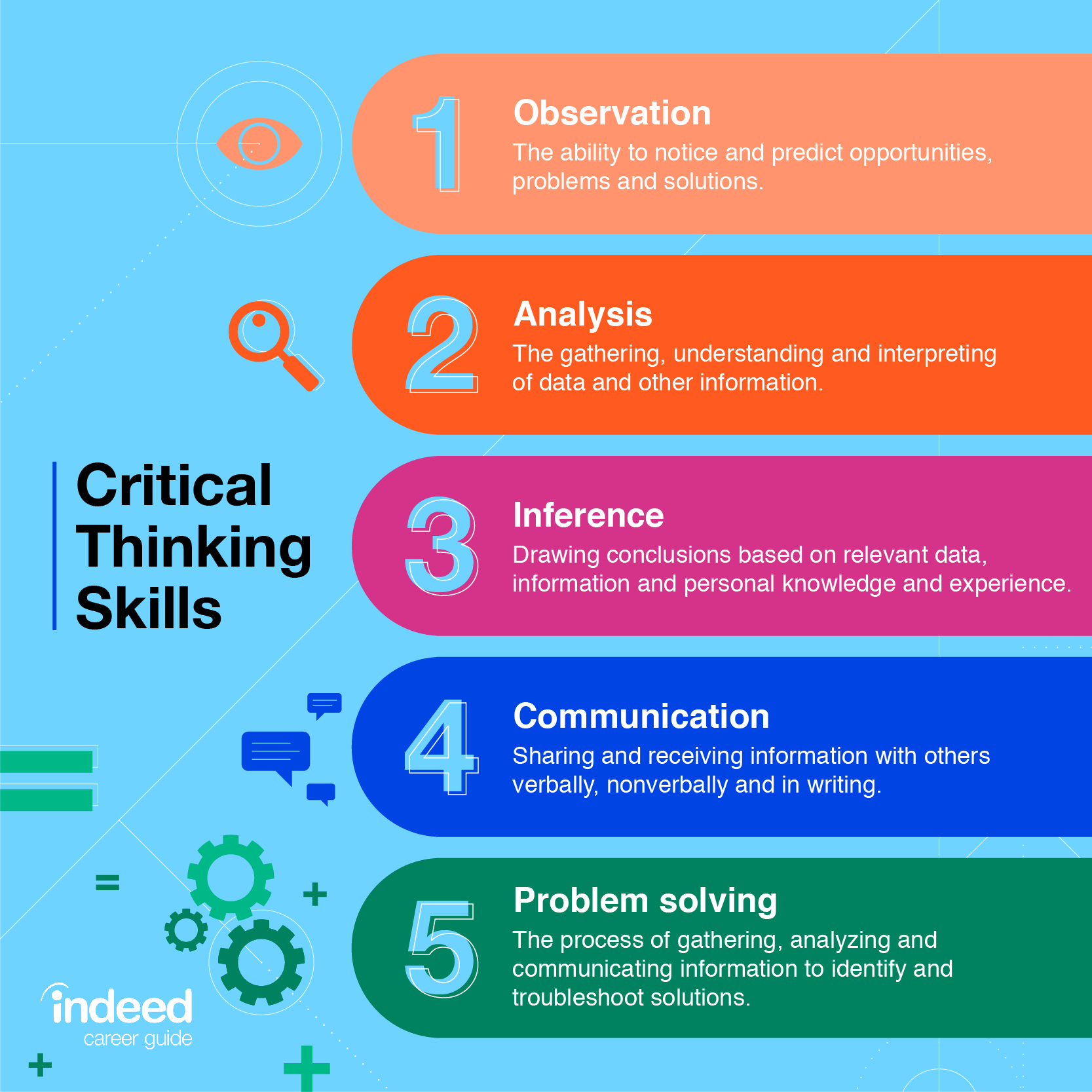
- Analysis: Breaking down complex ideas or problems into smaller components to understand their underlying structure and relationships.
- Evaluation: Assessing the credibility, relevance, and significance of information or arguments based on evidence and reasoning.
- Interpretation: Making sense of information by identifying patterns, drawing inferences, and discerning implicit meanings.
- Inference: Drawing logical conclusions or predictions based on available evidence and logical reasoning.
- Explanation: Clearly articulating one's reasoning, assumptions, and conclusions to others in a coherent and persuasive manner.
Advantages of Critical Thinking:
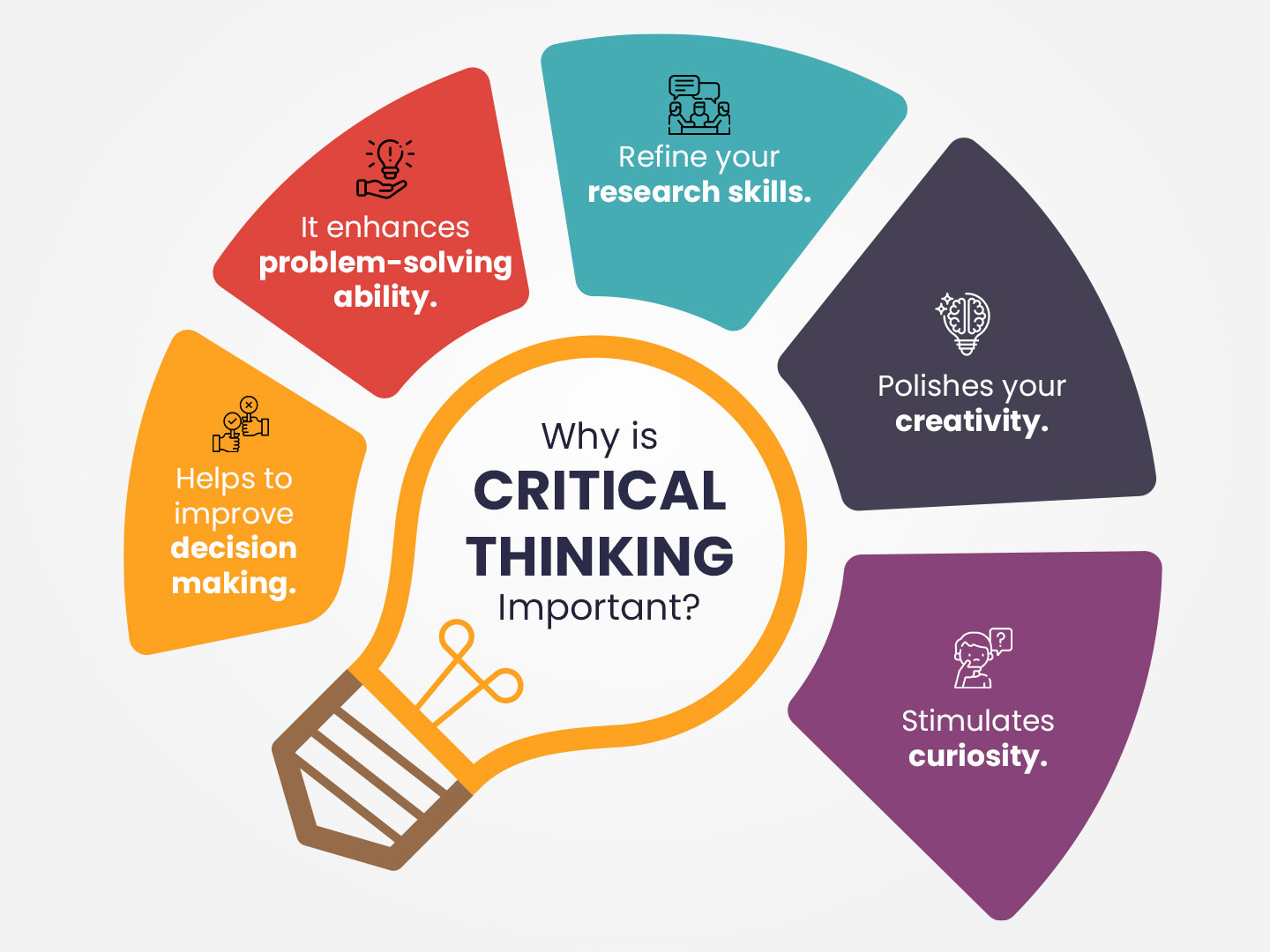
- Better Decision Making: Critical thinking enables individuals to evaluate information, assess alternatives, and weigh evidence effectively, leading to more informed and rational decision-making.
- Problem Solving: Critical thinking equips individuals with the skills to identify root causes of problems, analyze complex situations, and develop effective solutions, enhancing their ability to address challenges in various contexts.
- Enhanced Creativity: Critical thinking encourages divergent thinking and exploration of multiple perspectives, fostering creativity and innovation in problem-solving and decision-making processes.
- Improved Communication: Critical thinking promotes clarity, coherence, and precision in communication by encouraging individuals to articulate their ideas, support their arguments with evidence, and engage in reasoned dialogue with others.
- Empowerment: Critical thinking empowers individuals to question assumptions, challenge authority, and advocate for their own beliefs and interests, fostering intellectual independence and autonomy.
- Effective Learning: Critical thinking enhances learning by encouraging active engagement with course material, promoting deeper understanding, and facilitating the application of knowledge to real-world situations.
Disadvantages of Critical Thinking:
- Time Consuming: Critical thinking requires time and effort to analyze information, evaluate arguments, and consider alternative perspectives, which may delay decision-making or problem-solving processes.
- Cognitive Bias: Despite efforts to be objective, individuals may be susceptible to cognitive biases and subjective judgments that can influence their critical thinking process and lead to flawed conclusions or decisions.
- Conflict and Tension: Critical thinking may lead to conflicts or tension in interpersonal relationships or group settings, especially when individuals challenge established beliefs, norms, or authority figures.
- Over analysis: In some cases, individuals may become paralyzed by overanalysis or perfectionism, leading to indecision or inaction when faced with complex problems or ambiguous situations.
- Stress and Anxiety: Engaging in critical thinking can be mentally taxing and may contribute to stress or anxiety, particularly when individuals confront challenging or controversial issues that evoke strong emotions.
- Social Disconnection: Excessive focus on critical thinking may lead individuals to become overly skeptical or cynical, potentially alienating them from social interactions or causing them to disengage from meaningful relationships.
Future Trends in Critical Thinking:
- Integration of Technology: As technology continues to evolve, there will be increasing opportunities to leverage digital tools and platforms to enhance critical thinking skills. Virtual reality (VR), augmented reality (AR), artificial intelligence (AI), and machine learning (ML) can be used to create immersive learning experiences, simulations, and adaptive learning environments that facilitate active engagement and problem-solving.
- Emphasis on Data Literacy: With the proliferation of data in today's digital age, there will be a growing emphasis on data literacy as an essential component of critical thinking. Individuals will need to develop skills in data analysis, interpretation, and visualization to make informed decisions and draw meaningful insights from large datasets.
- Focus on Interdisciplinary Learning: Future trends in critical thinking education may emphasize interdisciplinary approaches that integrate insights from diverse fields, such as psychology, neuroscience, philosophy, and computer science. By combining perspectives and methodologies from multiple disciplines, individuals can develop a more holistic understanding of complex issues and enhance their critical thinking abilities.

- Cultivation of Metacognitive Skills: Metacognition, or the ability to reflect on and regulate one's own thinking processes, will be increasingly emphasized in critical thinking education. Future trends may involve explicit instruction in metacognitive strategies, such as self-monitoring, goal setting, and strategy planning, to help individuals become more aware of their cognitive strengths and weaknesses and to improve their problem-solving abilities.
- Global and Intercultural Perspectives: In an increasingly interconnected world, future trends in critical thinking education may prioritize the development of global and intercultural perspectives. Individuals will need to cultivate skills in cultural competence, empathy, and cross-cultural communication to navigate diverse social, political, and economic contexts and to address global challenges collaboratively.
- Ethical and Moral Reasoning: As ethical dilemmas and moral complexities become more prevalent in society, there will be a greater emphasis on ethical and moral reasoning in critical thinking education. Future trends may involve exploring ethical frameworks, ethical decision-making models, and ethical leadership principles to help individuals navigate ethical challenges and make principled decisions.
- Lifelong Learning and Continuous Improvement: Critical thinking is a skill that can be developed and refined over a lifetime, and future trends may emphasize the importance of lifelong learning and continuous improvement. Individuals will need to adopt a growth mindset and embrace opportunities for self-directed learning, skill development, and personal growth to adapt to changing environments and to thrive in the knowledge economy of the future.
Overall, future trends in critical thinking are likely to be characterized by a combination of technological advancements, interdisciplinary approaches, metacognitive strategies, global perspectives, ethical considerations, and a commitment to lifelong learning. By embracing these trends, individuals can enhance their critical thinking skills and become more effective problem-solvers, decision-makers, and active participants in society.
CONCLUSION:
In conclusion, the future of critical thinking holds immense promise and potential as societies navigate complex challenges and opportunities in the digital age. As we have explored, critical thinking skills are indispensable for making informed decisions, solving problems, and engaging meaningfully with the world around us. Looking ahead, several key trends are poised to shape the evolution of critical thinking education and practice.
- Firstly, the integration of technology will play a central role in enhancing critical thinking skills through immersive learning experiences, data analytics tools, and adaptive learning platforms. Digital innovations such as virtual reality, artificial intelligence, and data visualization will offer new opportunities to engage learners and promote deeper levels of analysis and reflection.
- Secondly, interdisciplinary approaches will become increasingly important as individuals seek to understand and address complex issues that span multiple domains. By drawing insights from diverse fields such as psychology, neuroscience, philosophy, and computer science, learners can develop a more holistic understanding of the world and cultivate versatile problem-solving abilities.
- Thirdly, the cultivation of metacognitive skills will be prioritized to empower learners to become more self-aware, self-regulated, and strategic in their thinking processes. Metacognitive strategies such as goal setting, self-monitoring, and reflection will enable individuals to become more effective learners and decision-makers, capable of adapting to evolving circumstances and challenges.
- Additionally, global perspectives, ethical considerations, and a commitment to lifelong learning will underscore the importance of critical thinking in fostering responsible citizenship and ethical leadership. By embracing diversity, empathy, and ethical reasoning, individuals can navigate complex moral dilemmas and contribute to positive social change in an increasingly interconnected world.

In essence, the future of critical thinking is bright, with technology, interdisciplinary learning, metacognitive strategies, global perspectives, and ethical considerations driving innovation and progress. By embracing these trends and fostering a culture of critical inquiry and lifelong learning, individuals can harness the power of critical thinking to navigate uncertainty, solve complex problems, and shape a brighter future for themselves and society as a whole.
Comments
Post a Comment